Kellogg.help
Kellogg classmates post what they're working toward, and the rest of the class offers to help. Reputation comes only from help that actually went somewhere.
- Built
- Jul to Aug 2026
- Stack
- Next.js, Supabase, Slack, Resend
- Who can join
- Kellogg students
- Status
- Live at Kellogg
why I built it
An MBA class is full of people who could help each other: an intro to a fund, a friend at a target company, someone who’s made the exact switch you’re attempting. Most of that help never happens.
Three things get in the way. Asks are too vague to act on, so “anyone in climate?” is easy to scroll past. People don’t know who can help, because the right person is rarely the obvious one. And help gets offered but nobody follows up, so no one learns whether it worked.
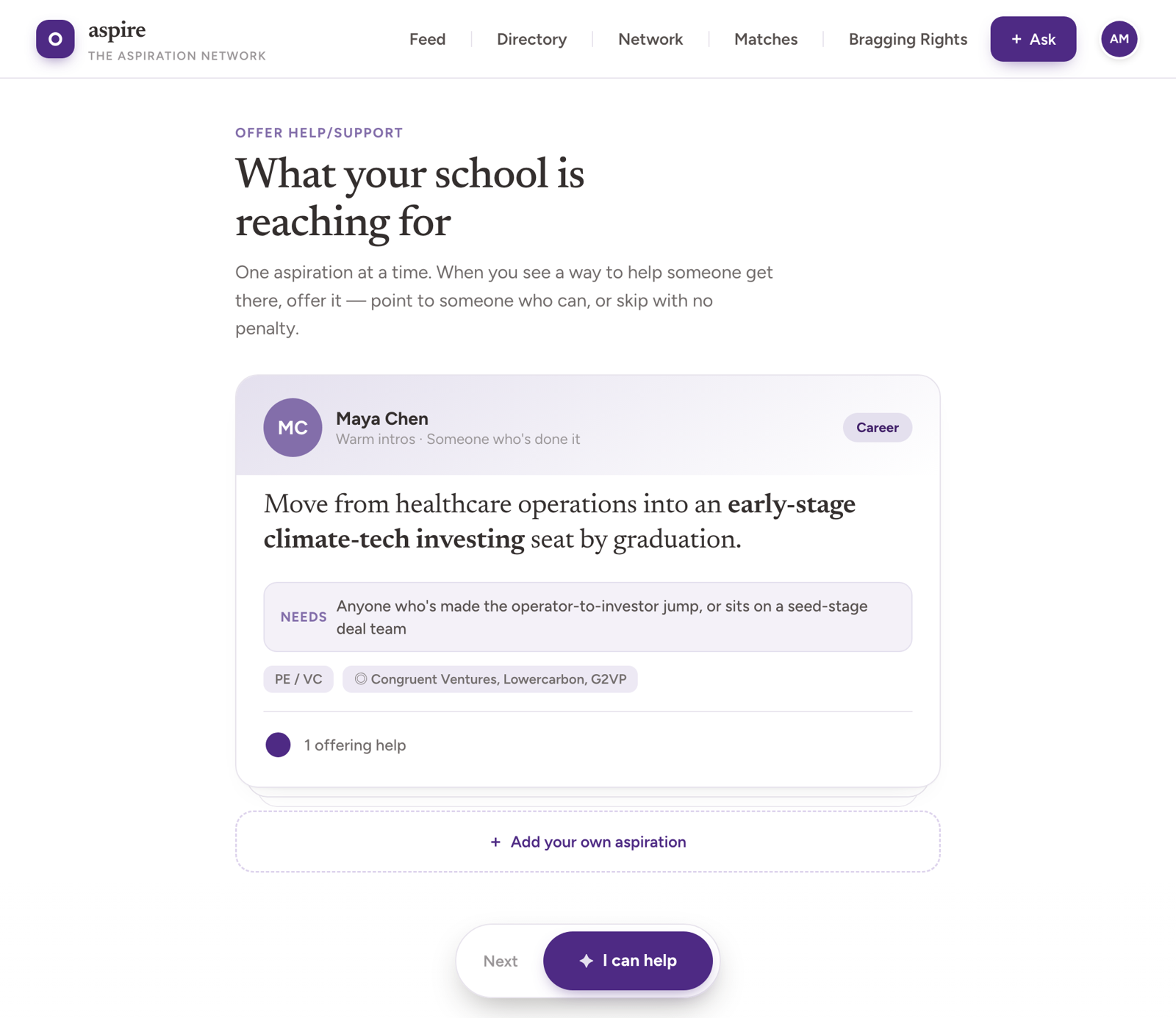
Kellogg.help is built around those three gaps. It pushes for specific asks, shows them to the whole class one at a time, and closes the loop by asking “did it go anywhere?”
what it replaces
Vague asks in the class Slack that are easy to scroll past, and help that nobody follows up on.
what it does
- Specific asksThe ask form pushes for the outcome you want, who could help and which organisations are on your radar.
- One ask at a timeThe feed shows asks that need help most first. Skipping is never recorded.
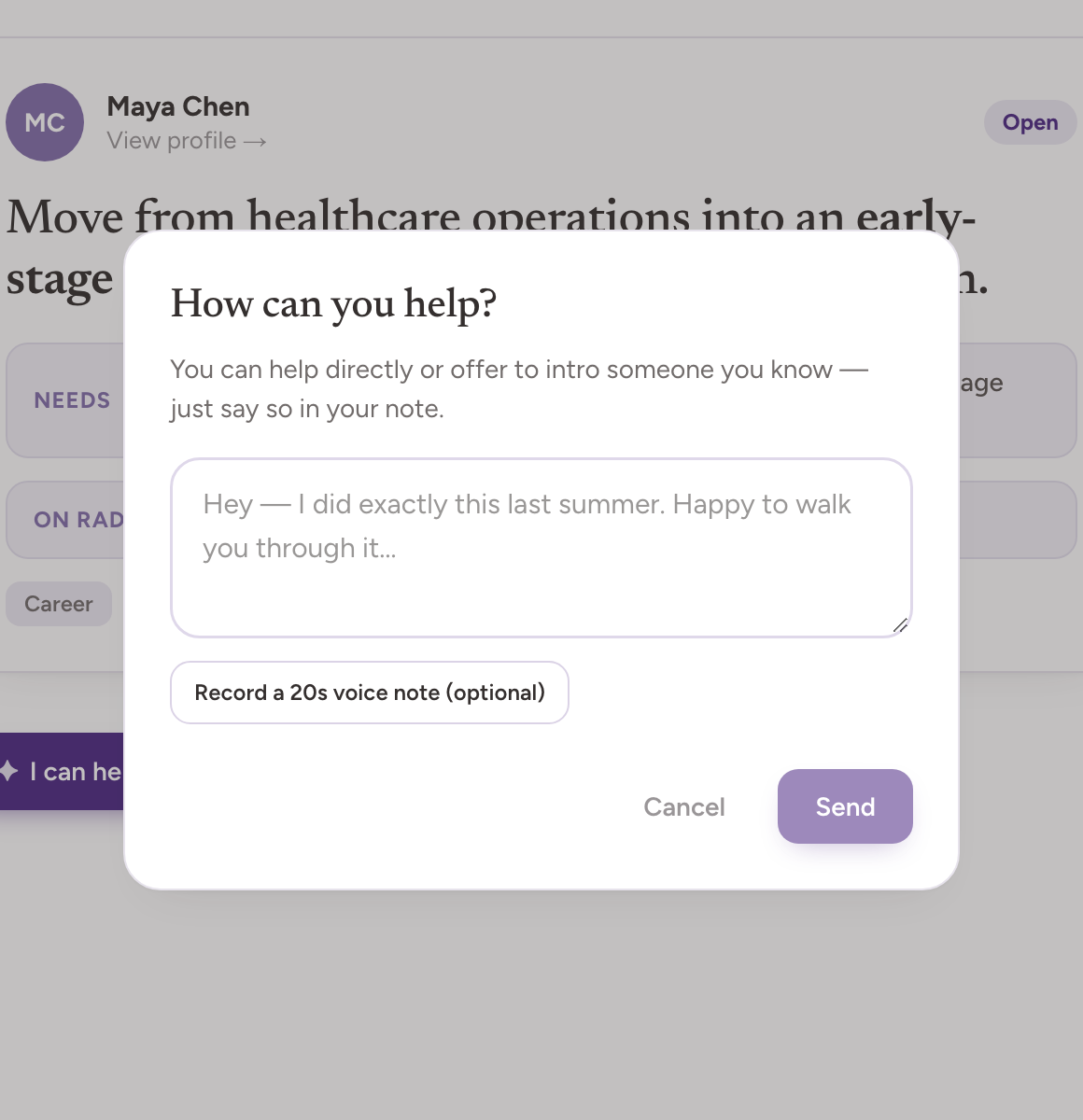
- One "I can help" buttonHelp directly, or offer to connect them with someone you know. It's just a note.
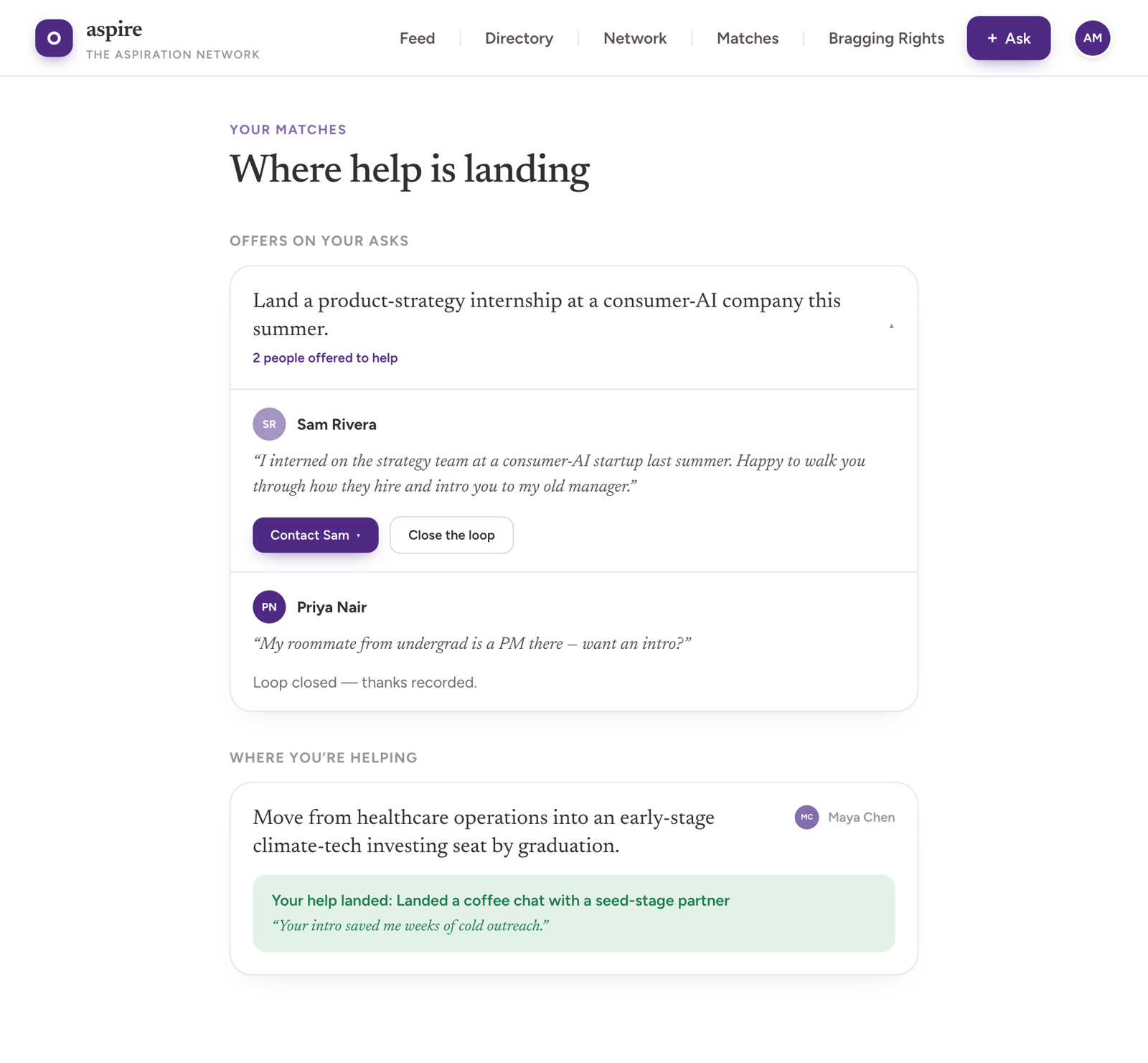
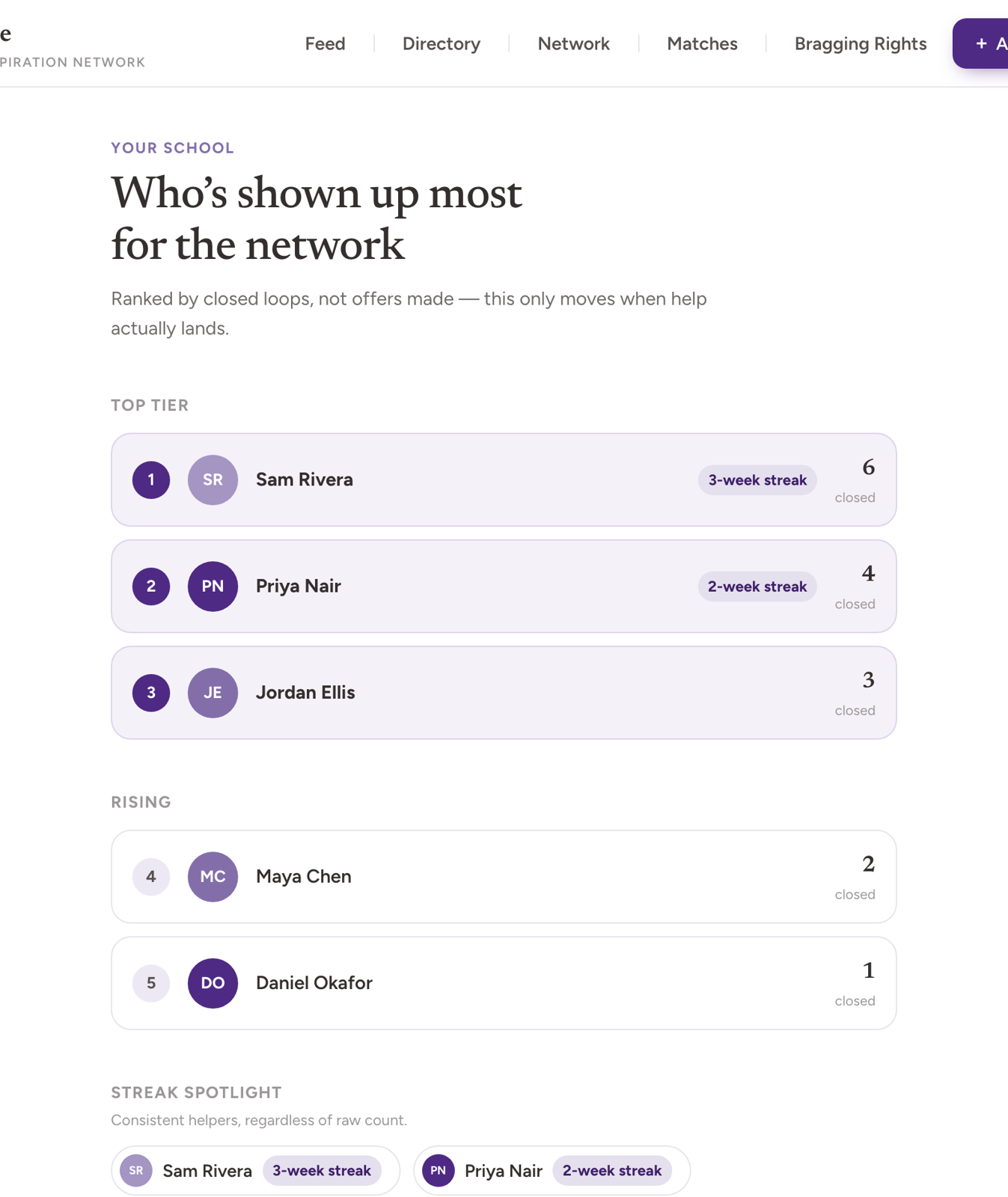
- Closing the loop"Did it go anywhere?" Only a yes from the person who asked earns reputation.
- Alerts in Slack and emailMatch alerts, a welcome message and a monthly report go to the class Slack.
- Anonymous when it's sensitiveAn ask can show as "Someone in your network" until a classmate offers help.
screens
first four weeks
- of asks got an offer of help
- 89%
- of the class posted an ask
- 23%
- of the class offered help
- 15%
- median wait for a first offer
- 47h
25 of 28 asks. The other 3 were still open in the feed.
27 of the 120 students in the class.
18 classmates made 50 offers between them.
13 of the 25 answered asks heard back within 48 hours.
From the first help report, which counted every ask and offer from 9 July to 6 August 2026. It counts offers, not outcomes: whether the help worked is recorded only when the person who asked closes the loop, and that's the next number to track.
how to get it
- Get the access code from your class president or community lead.
- Sign in with your Kellogg email. You type a code; there are no passwords or magic links.
- Post an ask, or work through the feed and offer help.
The app is set up for 59 business schools, each sealed off from the others, and adding one takes a single command.
what's next
- Launching a second school.
- Tracking closed loops: how many offers actually led somewhere.
- A weekly digest, already built and waiting to be scheduled.